
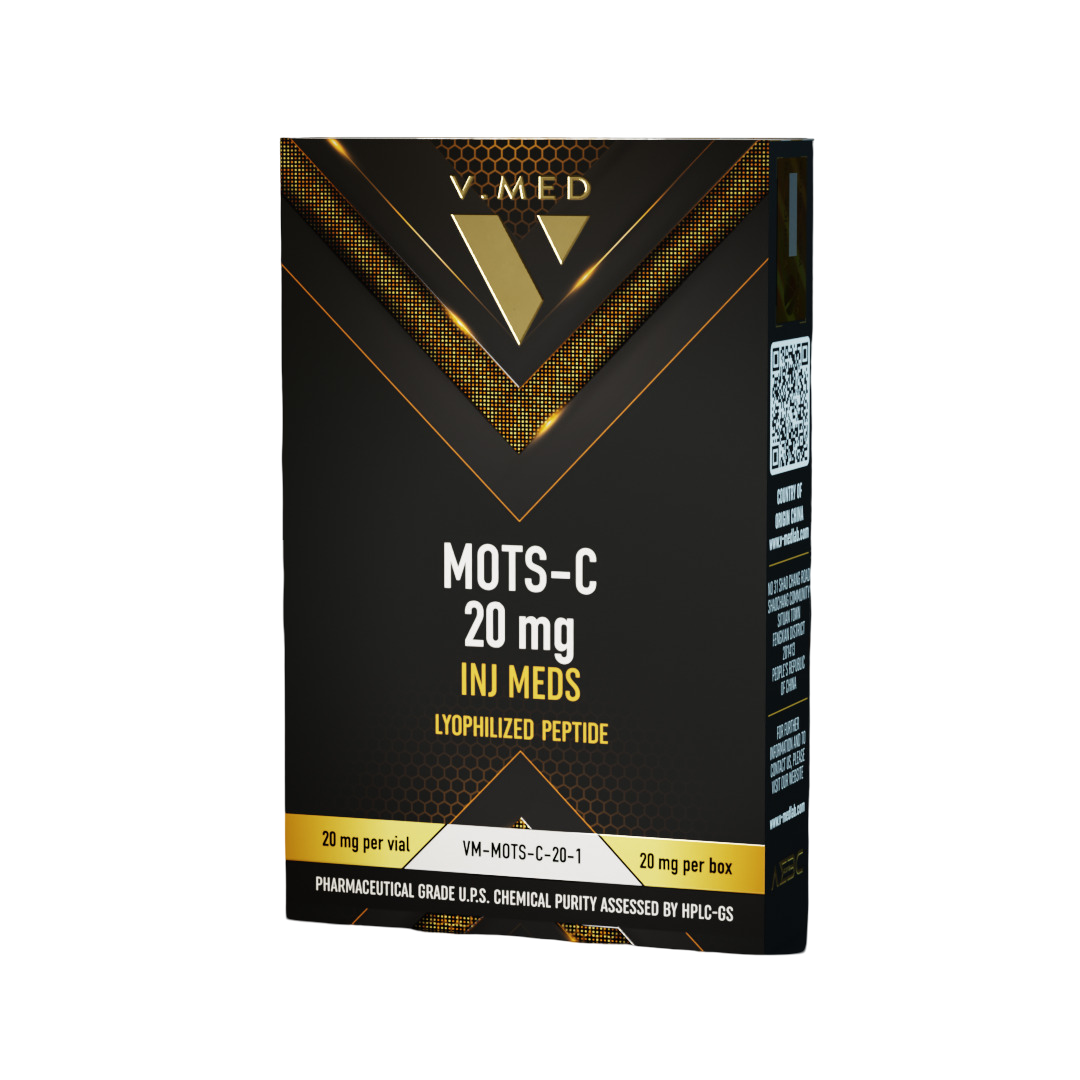
V.Med MOTS-C 20
R680.00
- 1 x 20mg MOTS-C Peptide
- 1 x 2ml Bacteriostatic Water
What Is MOTS‑c and How Does It Work?
MOTS‑c (Mitochondrial Open Reading Frame of the 12S rRNA-c) is a 16-amino acid peptide encoded by mitochondrial DNA (mtDNA), not nuclear DNA like most hormones and peptides. It plays a central role in metabolic homeostasis, helping regulate glucose metabolism, fatty acid oxidation, and cellular stress response.
➤ Mitochondrial Origin = Metabolic Power
Unlike typical peptides, MOTS‑c is synthesized in response to cellular energy demands—particularly when glucose is scarce or when the body is under stress. Its primary mechanism is activating AMPK (AMP-activated protein kinase), a master regulator of cellular energy.
→ AMPK activation = increased glucose uptake and fat oxidation
→ Downregulates anabolic processes that consume ATP
→ Promotes mitochondrial biogenesis and cellular resilience
“MOTS‑c functions as a mitochondrial-encoded hormone that enhances metabolic flexibility and insulin sensitivity.”
— Lee et al., Cell Metabolism
➤ Natural Expression and Peptide Supplementation
Your body naturally produces MOTS‑c, particularly during fasting or exercise. However, exogenous administration (via peptide injection) amplifies these effects—especially in cases of metabolic dysfunction, aging, or intense training.
→ Supports mitochondrial health and stress tolerance
→ Reduces fat accumulation while improving glucose disposal
→ Acts systemically but also targets muscle, liver, and fat cells
MOTS‑c Benefits for Metabolic Health, Performance, and Longevity
MOTS‑c offers a unique set of benefits by targeting the mitochondrial control center of energy production, insulin sensitivity, and fat metabolism. Its primary appeal lies in its ability to optimize fuel usage at the cellular level—making it highly relevant for fat loss, endurance, and aging.
➤ Improves Insulin Sensitivity and Glucose Regulation
MOTS‑c increases the translocation of GLUT4 (glucose transporter) to muscle cells, enhancing glucose uptake without needing insulin spikes.
→ Supports metabolic flexibility in both fasted and fed states
→ Useful for individuals with insulin resistance or post-cycle metabolic slowdown
→ May complement fasting, low-carb, or Clean Carbs strategies for performance athletes
“MOTS-c administration significantly improved glucose tolerance and insulin sensitivity in aged and high-fat-fed mice.”
— Lu et al., Aging Cell
➤ Promotes Fat Loss Without Muscle Breakdown
By activating AMPK and mitochondrial uncoupling, MOTS‑c encourages the body to burn fat more efficiently—especially during caloric restriction or training.
→ Reduces visceral and subcutaneous fat
→ Enhances fatty acid oxidation and lipolysis
→ Preserves lean muscle mass during cut phases
➤ Boosts Endurance and Exercise Capacity
MOTS‑c has been shown to increase aerobic performance by enhancing mitochondrial capacity and sparing glycogen during prolonged exercise.
→ More fat burned = glycogen spared = longer time to fatigue
→ Especially beneficial for CrossFit, endurance athletes, and metabolic conditioning
“MOTS-c improves physical performance by regulating mitochondrial respiration and metabolic substrate use.”
— Reynolds et al., Nature Communications
➤ Supports Anti-Aging and Stress Resistance
Emerging research suggests that MOTS‑c acts like a mitochondrial stress hormone, improving longevity pathways similar to caloric restriction.
→ Activates FoxO transcription factors (linked to stress resilience)
→ Enhances mitochondrial autophagy (mitophagy)
→ May protect against oxidative damage and aging-related decline
How to Use MOTS‑c: Dosage, Frequency, and Timing
MOTS‑c is typically administered as a subcutaneous injection, with cycles ranging from 2 to 4 weeks depending on goals—fat loss, performance enhancement, or metabolic reset. Because it mimics fasting and exercise-induced pathways, timing matters.
➤ Recommended Dosage
→ Typical dose: 5–15 mg per week, split into 2–3 injections
→ Injection frequency: 2–3x weekly (e.g., Monday, Wednesday, Friday)
→ Cycle length: 2–4 weeks on, followed by 2–4 weeks off
→ Injection method: Subcutaneous (abdomen, thigh, or flank area)
Beginners often start with 5 mg/week and titrate up based on response and tolerance.
➤ Best Time to Inject
MOTS‑c is most effective when used:
→ First thing in the morning on an empty stomach
→ 30–60 minutes before fasted cardio or training
→ On non-training days to maintain metabolic signaling
This mimics its natural production during fasting or calorie restriction and promotes better fat oxidation and glucose control.
“Timed administration of MOTS‑c enhances exercise-induced metabolic flexibility and may mimic calorie restriction.”
— Kim et al., Cell Reports
Stacking MOTS‑c With Peptides and Supplements for Maximum Results
MOTS‑c is a versatile peptide that pairs well with fat loss agents, insulin sensitizers, and mitochondrial enhancers. Whether you’re cutting, recomposing, or optimizing endurance, stacking it properly can maximize its metabolic and performance effects.
➤ Stack #1: Fat Loss and Body Recomposition
→ MOTS‑c: 5–15 mg/week, split 2–3x
→ CJC‑1295 (no DAC): 100 mcg AM/PM
→ Ipamorelin: 100 mcg AM/PM (paired with CJC-1295)
→ THERM: Natural fat burner to support appetite suppression and thermogenesis
→ Whey Protein Isolate: Maintain lean mass during calorie deficit
This stack amplifies growth hormone pulses, enhances metabolic signaling, and supports fat oxidation without muscle loss.
➤ Stack #2: Mitochondrial Function and Endurance
→ MOTS‑c: 10 mg/week, pre-training
→ Krill Oil: Supports mitochondrial membrane health and recovery
→ Ashwagandha Gummies: Helps mitigate oxidative stress and improve VO2 max
→ Clean Carbs: Provides glycogen support around training
This stack is ideal for athletes, cyclists, and CrossFitters looking to extend aerobic output, manage recovery, and buffer fatigue.
➤ Stack #3: Insulin Sensitivity and Hormonal Reset
→ MOTS‑c: 5 mg every 3 days
→ DHEA: 100 mg/day to support hormone levels post-cycle
→ Tamoxifen: 10–20 mg/day if used alongside an anabolic cycle
→ Probiotics: Improve gut-liver axis and insulin signaling
This protocol supports glucose metabolism, reduces cortisol dominance, and helps rebalance hormones during or after stressful phases.
MOTS‑c Side Effects and Safety Considerations
MOTS‑c is generally well-tolerated in both animal and early human studies. Since it’s naturally produced by the mitochondria, side effects tend to be mild, rare, and dose-dependent—especially when compared to other metabolic peptides like MK‑677 or IGF‑1 LR3.
However, like any exogenous compound that manipulates metabolic signaling, it’s important to monitor for potential issues.
➤ Commonly Reported Side Effects
→ Injection site irritation: Redness, swelling, or slight bruising at subcutaneous sites
→ Mild fatigue or lethargy: Especially when first adjusting to mitochondrial AMPK activation
→ Hunger changes: Some users report appetite suppression, while others feel more hungry due to enhanced fat mobilization
→ Muscle cramping: Rare, possibly due to increased fatty acid metabolism and electrolyte shifts
➤ Rare or Theoretical Risks
→ Hypoglycemia: Very rare, but theoretically possible when combined with fasting, Clean Carbs, or insulin-sensitizing stacks
→ Disrupted thyroid or cortisol rhythms: Only in extremely high or prolonged usage
→ Hormonal suppression: MOTS‑c does not suppress testosterone or endogenous growth hormone like anabolic steroids might
